
![All Sections Alpha: The Making of Space: 1999 [HARDCOVER] - The Gerry Anderson Store](http://gerryanderson.com/cdn/shop/files/all-sections-alpha-the-making-of-space-1999-hardcover-7498116.png?v=1757766647&width=720)
![Thunderbirds Comic Anthology Volume One [HARDCOVER] - The Gerry Anderson Store](http://gerryanderson.com/cdn/shop/files/thunderbirds-comic-anthology-volume-one-hardcover-4284931.png?v=1775804830&width=720)
![Thunderbirds IR Technical Operations Manual Special Limited Edition [HARDCOVER] - The Gerry Anderson Store](http://gerryanderson.com/cdn/shop/files/thunderbirds-ir-technical-operations-manual-special-limited-edition-hardcover-2759567.jpg?v=1777083157&width=720)
![Thunderbirds Comic Anthology Volume Two [HARDCOVER] - The Gerry Anderson Store](http://gerryanderson.com/cdn/shop/files/thunderbirds-comic-anthology-volume-two-hardcover-8431653.png?v=1775852368&width=720)
![Stingray W.A.S.P. Technical Operations Manual Standard Edition [HARDCOVER] - The Gerry Anderson Store](http://gerryanderson.com/cdn/shop/files/stingray-wasp-technical-operations-manual-standard-edition-hardcover-112278.jpg?v=1749664163&width=720)
![Stingray Comic Anthology Volume Two – Battle Lines [HARDCOVER] - The Gerry Anderson Store](http://gerryanderson.com/cdn/shop/files/stingray-comic-anthology-volume-two-battle-lines-hardcover-107681.jpg?v=1738856151&width=720)
![Thunderbirds IR Technical Operations Manual Special Limited Edition [HARDCOVER] - The Gerry Anderson Store](http://gerryanderson.com/cdn/shop/files/thunderbirds-ir-technical-operations-manual-special-limited-edition-hardcover-6098672.jpg?v=1777083157&width=720)






Should UFO & Space: 1999 Exist in the Same Universe?
Share
Share

Many continuity conspiracy theories persist surrounding the possible shared canonicity between Gerry and Sylvia Anderson's various worlds. The shared universe inhabited by most, if not all, of the Supermarionation heroes exists to varying levels of authenticity. In the pages of TV Century 21, crossovers and cameos were commonplace, but the puppet TV series themselves were less confident in promoting the possibilities of a cohesive timeline.
Less examined are the connections between UFO and Space: 1999. Do Moonbase Alpha and SHADO exist in a single timeline? Or rather, should they co-exist? Let's investigate!

Another Time, Another SHADO
No official media has ever explicitly confirmed that UFO and Space: 1999 are set in the same world, neither was it something ever confirmed by Gerry or Sylvia. There's never been an official adventure depicting Commander Straker and Commander Koenig crossing paths. Yet through their closely intertwined production histories, aesthetic similarities, and other hints and nudges given by spin-off media, the idea persists.
Space: 1999 never goes to any elaborate lengths to confirm or deny its shared space with UFO, but similarities persist. Space: 1999 emerged out of the wreckage of cosmically ambitious yet stunted plans for UFO's second series. Less of a continuation and more of a reinvention, this second proposed series of UFO would have been predominantly set on the Moon with a vastly increased defensive set-up of SHADO.
Indeed, humanity's expansive presence on the Moon as depicted in Space: 1999's opening episode, Breakaway, naturally blossoms out of the timeline of UFO. That two-decade time-jump between the two series is visually captured in the expanse between the cramped, isolated SHADO Moonbase and the sprawling, self-sustaining lunar metropolis of Moonbase Alpha. Isn't it more intriguing to consider that Moonbase Alpha wasn't created against a backdrop of generically flavoured space exploration, but rather, emerged out of the pre-existing presence of SHADO?

UFO even bears a slice of retroactive continuity that may be interpreted as foreshadowing the events of Space: 1999. Commander Ed Straker's constant battle against his buerocratic superiors to permanently expand SHADO's defensive capabilities involve expanding the outfit's lunar-based outposts, as mentioned in the episode Kill Straker!. Such an operational upgrade wouldn't come to pass during Straker's reign, but who's to say this can't be the foreshadowed presence of Moonbase Alpha beginning to loom over SHADO, if you choose to accept that these two series cohabit.
Reflections in the Canon
Rather more compelling evidence exists against the idea that UFO and Space: 1999 could ever occupy the same timeline. Ironically enough, we have to turn back to the combined behind-the-scenes histories of both series. A defining factor of Space: 1999 being greenlit was the removal of any consideration that any of the action would take place on Earth. With such a brutal separation between the two, and the interconnected nature of SHADO's Earth and lunar operations, it feels tricky to justify how both these series could be set in the same world. Indeed, Space: 1999's success seemed determined by the fact that UFO be as thoroughly left behind as possible.

Either series offer wildly different portrayals of alien races and their importance to each series' narrative tone, separating the two series further. Suggesting that UFO and Space: 1999 occur in the same timeline removes the significance heaped upon the unnamed, organ-harvesting aliens from UFO. Suddenly, they're no longer the only aliens in the universe, stripping them of their credible threat against the Earth. UFO's secretive, spy-fi action itself falls under threat by the sudden inclusion of such flamboyant aliens as the Taybor or Gwent. SHADO's thrillingly clandestine operation become forcibly shunted into the metaphysically-charged grandeur of Moonbase Alpha.
Moonbase Alpha's purpose as a springboard for peaceful exploration of the stars to enhance our knowledge of the cosmos is also at odds with the military might of SHADO's Moonbase. In the face of Space: 1999's philosophical soul, UFO's cold war suddenly feels painfully small. And then there's the small matter of why nobody on the Moon in 1999 is wearing their standard issue regulation purple wigs.
No Definitive Answer?

The most likely and sensible answer is to accept that both series firmly exist separate from each other. However, is it not more fun to think they might? Perhaps it all comes down to the personal preference of the individual viewer. There's little you can do to forcibly join the two series together, just as there's nothing preventing you from wanting to enjoy both series together. Perhaps wanting Space: 1999 and UFO to share in the same timeline speaks more about our personal relationships with these series than anything either series achieves outside of that emotional connection we form with the stories and characters we latch onto.
However, over 50 years since both series' debut, some scattered nuggets of storytelling from extended media suggests the threads between the two series run deep. Throughout the Moonbase Alpha Technical Operations Manual, there are enough subtle hints within the guide's extensive worldbuilding details to confirm that Moonbase Alpha's development rapidly outgrew that of SHADO's own lunar installations, which appear to have been abandoned by the late 1990s. Elsewhere, in James Swallow's paranoid thriller UFO novella UFO: Shadow Play, references are made to the World Space Commission's nuclear-powered rocket programme, the same governing body that a certain Commissioner Simmons will eventually join...
The lack of any definitive onscreen media to confirm any connectivity is perhaps the strongest argument against UFO and Space: 1999's intertwined timeline. During the publicity stages in pitching the series to television networks and the press, Space: 1999's ground-breaking special effects and far-flung cosmic adventure were key selling points to ensure its eventual success. Why would this hot new series remind potential broadcasters, investors and viewers of an older, inferior product? Equally, the expanding narrative possibilities presented by post-series spin-off media allow for more intriguing cross-canon ideas to play out, ones which were rarely dabbled in on screen.

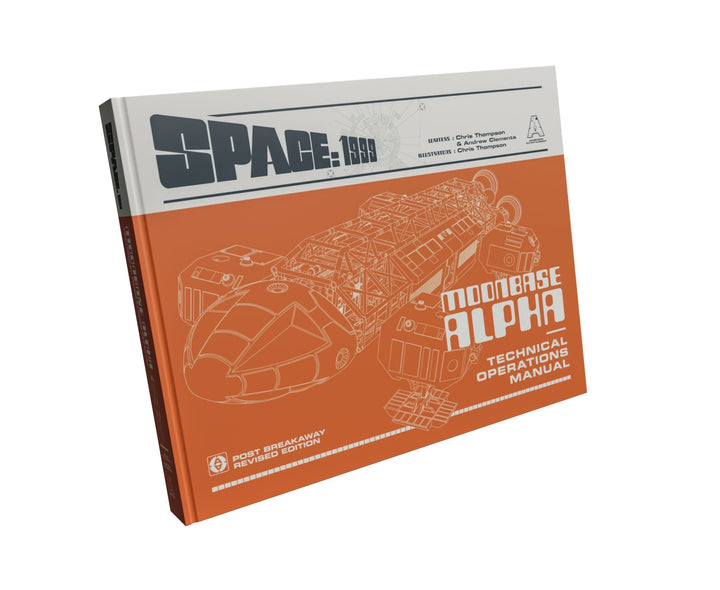
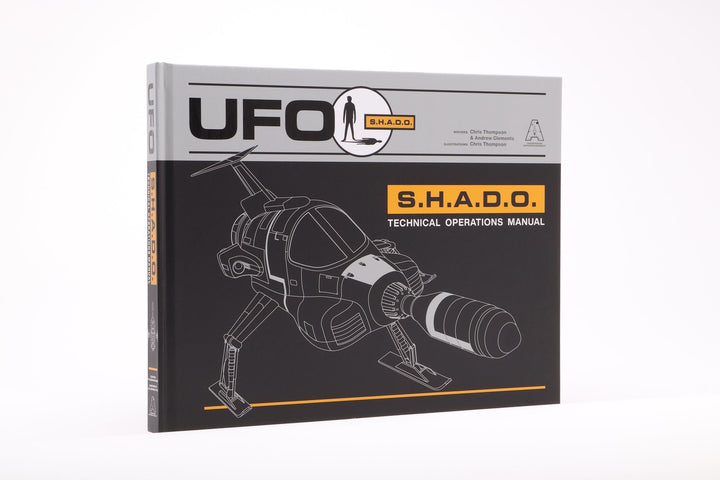
Discover more about the shared history between UFO and Space: 1999 with Fred McNamara and Tim Heald's forthcoming definitive series guidebook, All Sections Alpha: The Making of Space: 1999! You can also learn the worldbuilding secrets of both series with our Technical Operations Manuals for SHADO and Moonbase Alpha, as well as dive into James Swallow's brilliantly thrilling UFO adventure, UFO: Shadow Play!
Sign up to the Anderson Entertainment newsletter to receive all the latest Gerry Anderson news, exclusive releases and more transmitted direct to your inbox!


18 comments
I’ve always thought they did. In fact, more than a few of us put the two shows together before we knew that one was born from the other. Later we’d actually join the shows in satire, but still asking the question of what if they existed side by side. Satire because we did not have the massive budget to make it look like a serious production, and got a lucrative advert contract from Skydiver Coffee. but even in satire, UFO and Space:1999 looked pretty good together! (UFO:1999, see Youtube for more)
What if the existence of S.H.A.D.O. was suppressed and buried? Including the existence of a captured alien space craft that had an interestellar engine? Maybe its a failsafe to detect an explosion and activate to warp out of the area and when the nuclear waste exploded it interacted with the engine in some way…? Might explain some things…
I think that the setting of UFO could possibly co-exist with the less well known but fondly remembered BBC series, Moonbase 3. This also featured the early development of the moon, with different national interests having small bases. The plots often had realistic scientific or political themes. By contrast, Space 1999 seems more of a glorious fantasy, with impossible transit-times to new solar systems to meet the aliens-of-the-week, or pseudoscience such as artificial gravity, or physics-defying re-entry and launch to orbit of the un-aerodynamic Eagle transporter. But I absolutely loved the Eagle, especially when it was used as a general-purpose workhorse in cis-lunar space. The show could have made more use of interchangeable modules. It would have been fun to have a Habitat Module transferred to a winged launcher/lander spaceplane for those planet-bound episodes!
I think it could go either way, as far as both being in the same universe, but I’m confused on why this article suggests that they aren’t – the Moonbase Alpha Tech Ops Manual clearly shows that they are, with artwork depicting Alphan technicians discovering the “ruins” of SHADO’s moonbase hangar bay, complete with interceptors. I thought that was the official word on it.
One issue is the year in Space 1999. They might co-exist more credibly if Space were really set in 2029, or at least a few decades later than the title. While the tech used in the program might be a little out of date (too many old fashioned crt screens) for a later time, a little additional temporal distance might allow greater continuity between the two series, and explain why so much other tech and infrastructure has been developed. Fun to think about…